Finding Hidden Pool Leaks
Many homes in Old Bridge enjoy backyard swimming pools. However, the harsh New Jersey winters and the necessary freezing and thawing cycles during winterization and spring opening take a toll on pool infrastructure. If you find yourself constantly adding water to maintain the skimmer level, you may have a leak. Pool leak detection Old Bridge NJ involves testing both the underground plumbing lines and the pool structure itself to find the source of water loss.
Evaporation vs. An Actual Leak
During the hot summer months, some water loss is completely normal due to evaporation and splashing. A simple way to confirm a leak is the "bucket test." Place a bucket filled with water on the second step of the pool, matching the water level inside the bucket to the pool water level outside it. Mark both levels. After 24 hours, if the pool level has dropped significantly more than the bucket level, you have a leak.
Common Areas for Pool Leaks
Pools are complex systems with extensive plumbing running beneath concrete decks or landscaping. Leaks typically fall into two categories: plumbing line failures and shell/fitting failures.
- Skimmer Assemblies: The joint where the plastic skimmer meets the concrete or vinyl liner is a frequent source of leaks due to ground settling.
- Underground Plumbing: Return lines and suction lines buried underground can crack from freezing temperatures during the winter or from ground shifting. This scenario requires an approach similar to water line leak detection.
- Light Niches: The conduit housing the pool light wiring is a common pathway for escaping water.
- Main Drains: Failures at the main drain in the deep end can cause steady, unseen water loss.
The Detection Process
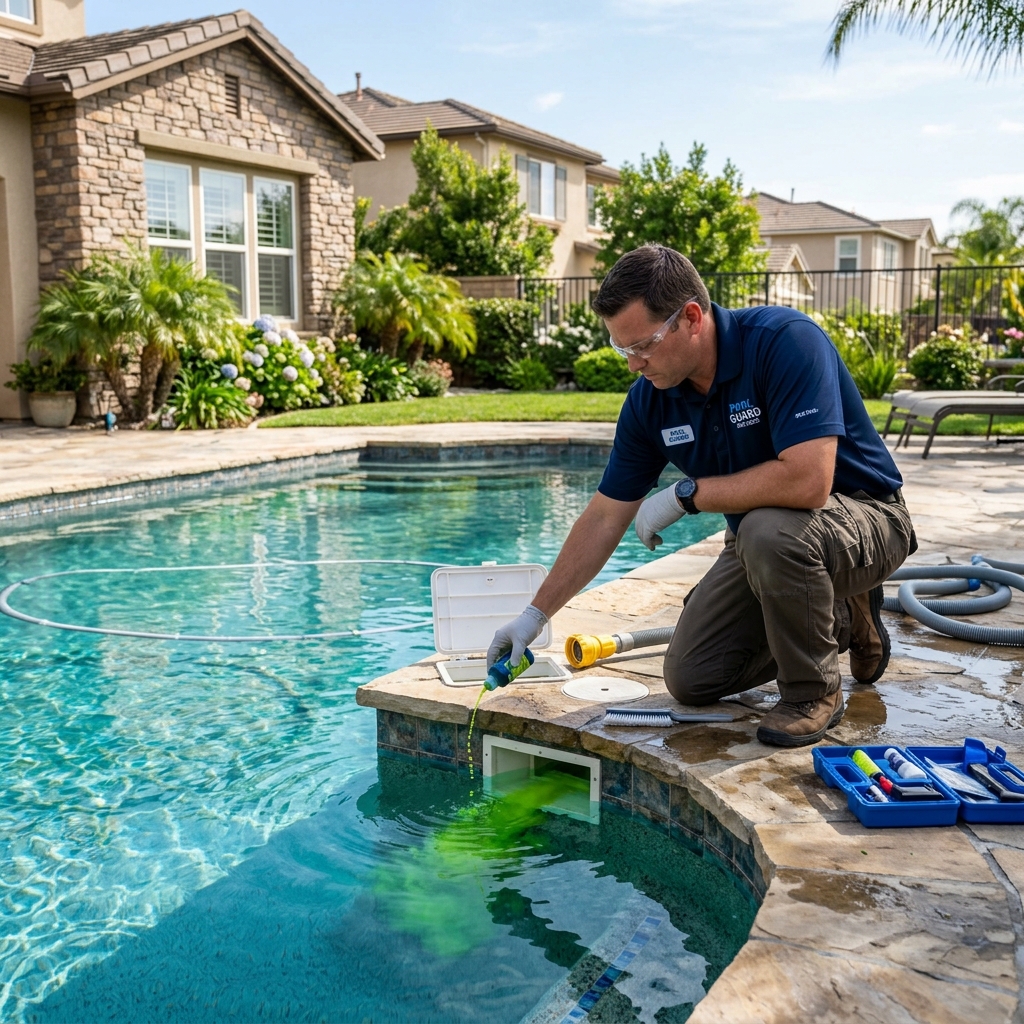
We do not guess and break up your pool deck. A professional pool leak detection starts by systematically isolating the plumbing systems. We plug the return and suction lines and perform pressure tests. If a line fails to hold pressure, we know the leak is underground within that specific pipe.
If the plumbing holds pressure, the focus shifts to the pool structure. Using specialized dyes, we carefully test the water around the skimmer, returns, main drain, and light niches. The dye is pulled directly into the leak, visually confirming the exact location of the failure.
After the Leak is Found
Finding the leak is the critical first step. It is important to note that not every pool leak requires major structural work or tearing up a concrete deck. Many fitting leaks or skimmer separations can be repaired relatively easily once pinpointed. However, if an underground line has failed, knowing exactly where it is broken allows for a highly targeted repair.
Addressing pool leaks quickly is vital because escaping water can wash away the supporting soil beneath your pool deck or foundation, leading to much larger structural issues. If you suspect your pool is losing water, acting early saves money and prevents secondary property damage.