Finding Leaks Under Concrete Foundations
Many homes in Old Bridge, particularly those built on slab foundations or those with finished lower levels, have water supply lines routed directly beneath the concrete. When these subterranean pipes develop a pinhole leak or suffer a failure, the escaping water can cause significant unseen damage. Slab leak detection Old Bridge NJ requires specialized techniques because the plumbing is entirely inaccessible to visual inspection.
Why Do Sub-Slab Pipes Leak?
In most residential construction involving slab foundations, soft copper tubing is utilized for the water lines. Over decades, this copper is subjected to environmental stress. Soil movement or settling can cause abrasion against the concrete or gravel beneath the slab. Additionally, the chemistry of the soil or the water itself can lead to slow corrosion, eventually resulting in a pinhole leak. Due to the enclosed nature of the slab, these leaks can run continuously for a long time before they are discovered.
Warning Signs of a Slab Leak
Water always seeks the path of least resistance. When it escapes under a slab, it may travel along the exterior of the pipe before pushing its way up through cracks or traveling outward. Watch for these indicators:
- Warm Areas on the Floor: A hot water line leaking under the concrete will heat the slab above it, making tile or wood flooring noticeably warm to the touch.
- Cracked Flooring: Moisture pressure from below can crack tile grout, warp hardwood, or cause laminate flooring to buckle.
- Damp Carpets: Unexplained wet spots in carpeted rooms on the lower level, especially near walls.
- The Sound of Running Water: Hearing water moving when all faucets are closed, combined with a spinning water meter, strongly suggests a significant underground leak.
The Electronic and Acoustic Detection Process
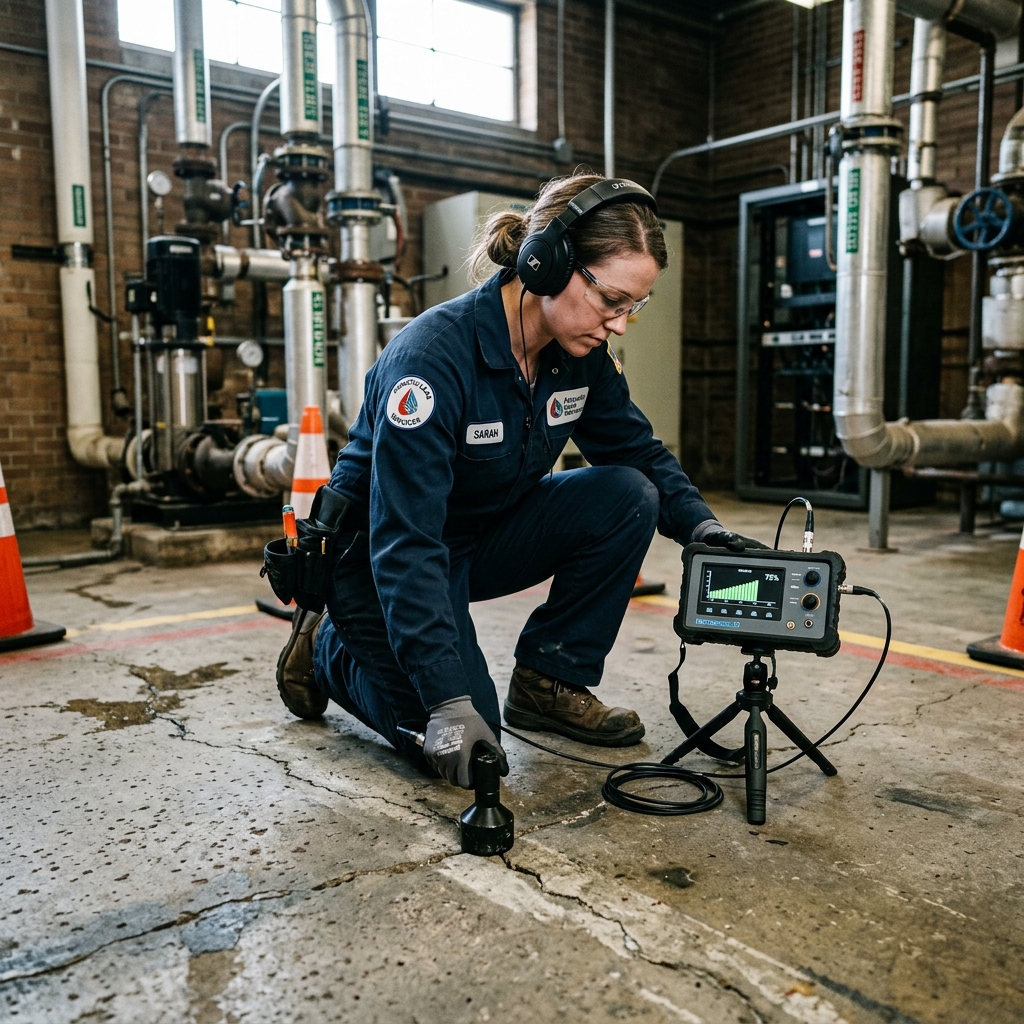
Jackhammering the floor blindly to find a leak is not a solution; it is a costly mistake. We utilize advanced, non-destructive equipment to locate the problem. First, we isolate the hot and cold plumbing systems and perform a pressure test to confirm which line is compromised.
Next, we use sensitive acoustic leak detection equipment. By listening through the concrete floor, we can hear the distinct frequency of pressurized water escaping into the surrounding soil. This allows us to pinpoint the location accurately. This process often works hand-in-hand with hidden water leak detection tools if the leak is close to interior walls.
Repair Paths After Detection
Once the slab leak is pinpointed, you and your plumber have choices. Depending on the location, the age of the home, and the extent of the corrosion, options may include:
- Spot Repair: Carefully breaking the concrete directly over the leak to repair the specific section of pipe.
- Rerouting: Bypassing the leaking underground pipe entirely by running a new water line through the walls or ceiling.
- Repiping: If the underground copper is severely degraded, a complete pipe leak repair strategy might involve repiping the affected system to prevent future slab leaks.
Addressing these issues early is crucial, especially in Old Bridge where seasonal ground freezing can exacerbate foundation issues. If you suspect an issue, acting quickly can prevent a minor leak from turning into a major water line leak detection or foundation problem.